
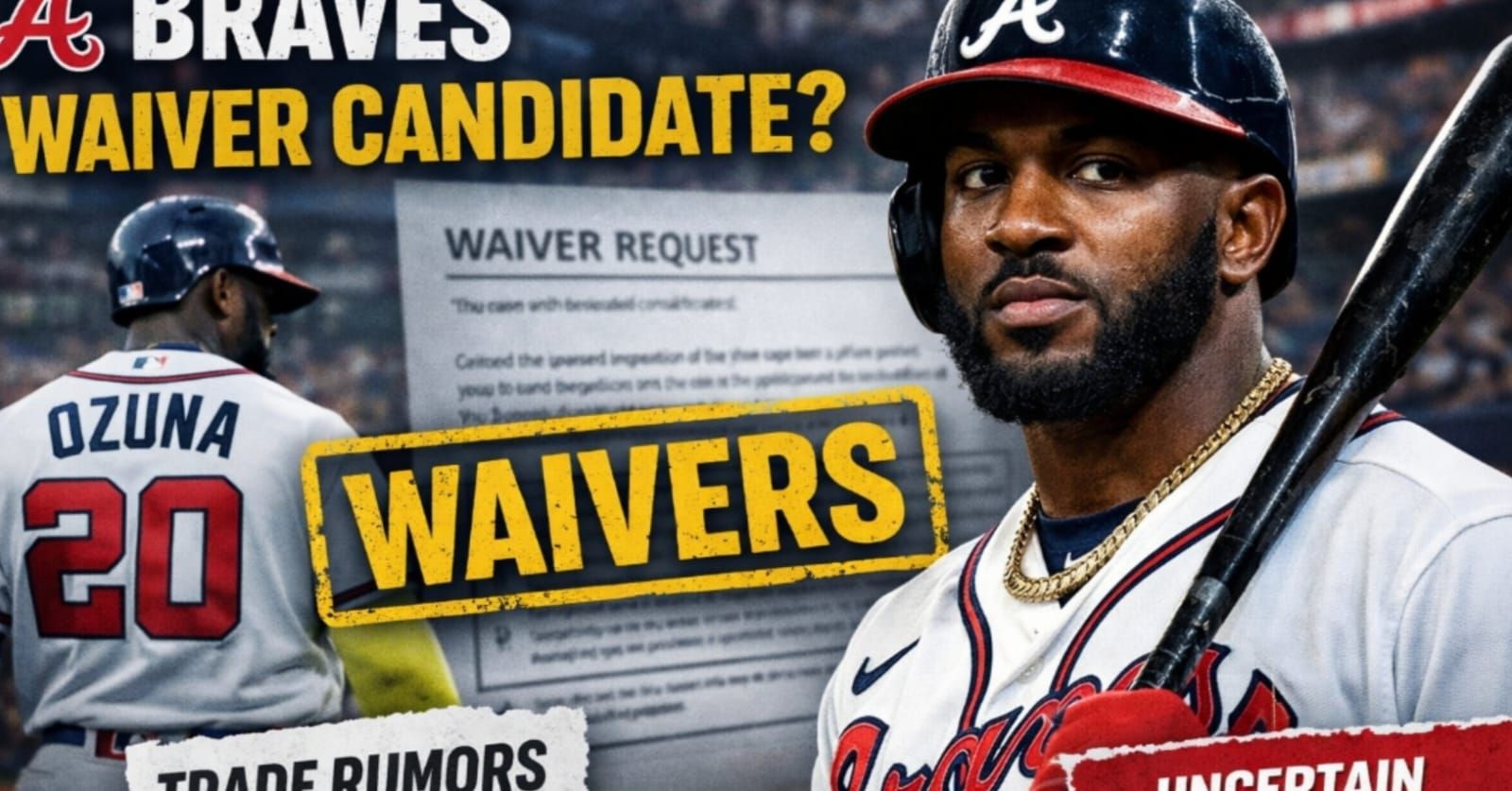
The phrase braves marcell ozuna waiver candidate has started to carry real weight as the season moves into its most decisive stretch. Marcell Ozuna has been a major run producer for the Atlanta Braves, delivering the kind of power that can swing games quickly and change how opponents pitch to the rest of the lineup. But MLB roster decisions aren’t made on production alone front offices juggle performance trends, defensive value, health, payroll flexibility, and clubhouse dynamics.
This Space Waves breakdown explains why the braves marcell ozuna waiver candidate conversation is worth monitoring. It’s not just about one player’s stat line. It’s about roster strategy, potential opportunities for other teams, and what Atlanta could gain or lose if a veteran slugger becomes part of a waiver or trade scenario.
Understanding the braves marcell ozuna waiver candidate chatter starts with the bigger concept: waiver candidates can reshape MLB rosters fast.
Waivers matter because they can offer teams a cost-efficient way to add talent or depth without paying the usual prospect price of a trade. For contending clubs, a waiver pickup can stabilize a weak spot, strengthen the bench, or add a power bat for October. For rebuilding teams, a waiver claim can bring proven production, create lineup structure, and sometimes provide veteran leadership for younger players.
The waiver market also forces front offices to stay sharp. A recognizable name can appear on waivers for reasons that don’t always reflect talent roster crunches, salary concerns, injuries, or a team prioritizing a different direction. That’s why braves marcell ozuna waiver candidate is the kind of storyline that can ripple across the league.
Before diving deeper into the braves marcell ozuna waiver candidate angle, it helps to frame who Ozuna is as a player. He’s a veteran slugger known for power, emotional intensity, and run production. Over his career spanning multiple teams he’s built a reputation as a middle-of-the-order threat capable of driving in runs in bunches.
His time with the Braves has included strong stretches where he looked like a lineup anchor. That’s exactly why the waiver talk feels unusual: the conversation isn’t about whether he can hit. It’s about whether the total roster equation still makes sense as the season advances.
If you’ve seen “braves marcell ozuna waiver candidate” trending and wondered what waivers actually do, here’s the clearest way to think about it:
When a player is placed on waivers, other teams get the chance to claim him. If a team claims the player, the player changes organizations. If no one claims him, the original team typically gains options depending on the waiver type and the player’s eligibility such as keeping him, adjusting roster status, or making a different move later.
Teams often use these when they want to remove a player from the 40-man roster. If the player clears waivers, the club may have additional flexibility in how they assign or manage that roster spot.
These are connected to the intention to release a player. If claimed, another team takes the player; if not, the player becomes available as a free agent.
For the braves marcell ozuna waiver candidate discussion, the key point is practical: waivers are often a mechanism for flexibility, not automatically a verdict on a player’s talent.
The braves marcell ozuna waiver candidate topic exists because several factors can push a productive hitter into roster-decision territory.
One of the biggest reasons Ozuna gets discussed as a waiver candidate is defensive inconsistency. Even if the bat plays, teams sometimes re-evaluate players whose defense limits late-game options or forces stricter lineup planning. If a club wants more flexibility especially during playoff-style baseball—defensive fit becomes a bigger part of the calculation.
Health concerns matter in a long season. Even when a player shows resilience, a history of injuries can raise questions about reliability, recovery, and availability. That uncertainty can influence how a front office plans its depth chart and postseason readiness—another reason braves marcell ozuna waiver candidate rumors can surface.
Financial context is impossible to ignore. Ozuna’s contract is a meaningful investment, and teams constantly compare salary to overall value (offense, defense, durability, and role). If production dips or roster needs shift, payroll flexibility becomes part of the conversation. That’s where the risk-versus-reward debate intensifies for both Atlanta and any team considering a claim.
The waiver conversation isn’t always purely about on-field performance. Teams also consider clubhouse structure, chemistry, and stability. When a player is tied to off-field issues or fluctuating reliability, it can add another layer to a front office decision—even if the player remains capable of changing games offensively.
If the braves marcell ozuna waiver candidate scenario ever becomes real, certain teams naturally stand out based on need and roster construction.
A club searching for offensive consistency and power could view Ozuna as a direct way to inject run production. If the lineup needs an immediate spark, a proven slugger profile fits.
A contender-minded team that values depth and experience could see Ozuna as a lineup enhancer for critical stretches. His ability to drive in runs could matter in tight games late in the season.
Teams looking to strengthen the core of their offense often prioritize hitters who can handle high-pressure moments. Ozuna’s profile as a veteran run producer would be attractive to a club seeking a reliable bat.
A reunion angle is always compelling, but the roster fit matters too: a team balancing youth development with competitiveness may value veteran presence and middle-order power.
These aren’t guarantees waiver decisions depend on money, roster spots, and internal priorities. But they’re logical “benefit” teams whenever braves marcell ozuna waiver candidate talk becomes serious.
Waivers aren’t the only pathway in the braves marcell ozuna waiver candidate conversation. Trades often give teams more control, especially when contract size and roster timing are involved.
The trade market could include high-profile buyers chasing a power bat—clubs like the New York Yankees or the Chicago White Sox often get mentioned in speculation because of lineup needs and the value of adding postseason-impact offense.
Moving Ozuna via trade could:
But it also comes with a cost that isn’t just numerical: losing a veteran presence can affect clubhouse rhythm, leadership dynamics, and the mental comfort of having an established run producer in the middle of the order.
If the braves marcell ozuna waiver candidate speculation turned into a real roster move, Atlanta would feel it immediately especially offensively.
Ozuna’s ability to drive in runs is a centerpiece of Atlanta’s scoring plan. Removing that bat creates a gap that can’t always be filled by simple lineup shuffling.
Power changes pitching behavior. A middle-order threat can force pitchers to avoid mistakes, which indirectly creates better pitches for teammates. If Ozuna exits, opposing staffs may attack the lineup more aggressively, especially in key spots.
The Braves often operate in win-now mode. Any disruption especially involving a major bat can affect momentum and confidence during a tight playoff race.
Even if Ozuna isn’t always viewed as a defensive standout, his offensive ceiling in clutch moments can be the difference in games where one swing decides everything.
A storyline like braves marcell ozuna waiver candidate doesn’t stay quiet. Fans react fast some defend his upside and point to how rare true power bats are. Others argue that the Braves should prioritize roster flexibility and cleaner overall roster fit.
Modern sports coverage accelerates everything. Rumors spread quickly, and even minor roster signals can turn into major headlines. That’s why it’s important to evaluate the logic behind the discussion not just the noise.
This is where the braves marcell ozuna waiver candidate debate splits into two camps.
In MLB, tough decisions are often the ones that define seasons.
The braves marcell ozuna waiver candidate conversation matters because it represents how contenders think: constantly optimizing, constantly weighing risk, and constantly balancing the present with the future.
Ozuna’s Braves story is layered big offensive moments, expectations tied to contract value, stretches of inconsistency, and questions that go beyond the box score. Whether Atlanta keeps him, trades him, or explores waiver-related options, the coming weeks are about one thing: building the cleanest, most playoff-ready roster possible.
And that’s why this isn’t “just a rumor.” It’s a strategic checkpoint in a season where every roster move can shape October.
Because waiver talk often reflects a mix of performance volatility, defensive fit, injury reliability, payroll planning, and roster flexibility.
He would move to the claiming team, and the roster/contract responsibility typically transfers as part of that move.
Depending on service time and contract language, veteran players may have certain rights that affect assignments or roster outcomes.
It can, unless another team assumes the contract. Financial impact depends on how the move is structured and whether salary transfers.
Yes. When he’s locked in, Ozuna remains a high-impact power bat who can change games with one swing exactly why the braves marcell ozuna waiver candidate debate is so intense.