
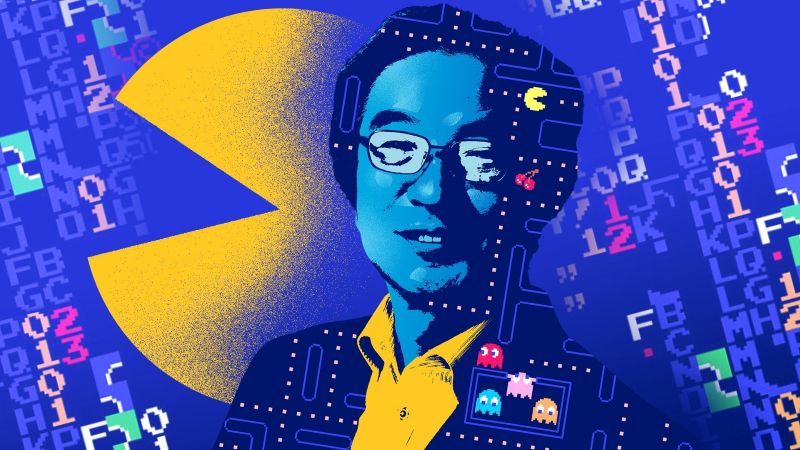
The inventor of Pacman is Toru Iwatani. He created and designed the game at Namco, with a team that built the final arcade release.
Pac-Man felt revolutionary because it was instantly easy to understand, used patterned ghost AI that rewarded strategy, and added power pellets as a comeback mechanic that made every run more replayable.
Play Drift Boss for a quick reset, then return to Pac-Man with calmer inputs and cleaner routes.
Want the full story and key facts on Who is the inventor of Pacman? Read the full article below.
The inventor of Pacman is Toru Iwatani. He is widely recognized as the original creator and lead designer who conceived Pac-Man’s core idea, gameplay loop, and character-driven approach while working at Namco.
That said, Pac-Man was not built by one person alone. Like most classic arcade hits, it came to life through a development team at Namco that helped turn Iwatani’s concept into a finished, playable cabinet game.
So the most accurate phrasing is: Toru Iwatani invented Pac-Man, and Namco developed and published it.
Toru Iwatani was a game designer at Namco who wanted to build something different from the dominant arcade trend of the late 1970s.
At the time, many popular games leaned heavily into space shooters and combat themes.
Iwatani’s design goal was to create a game that felt friendly, approachable, and broadly appealing, while still being skill-based and competitive.
What he “invented” about Pac-Man is not just a character. It is the entire design package:
A simple, instantly understandable objective: eat all dots in a maze
A high-pressure enemy system: four ghosts with distinct behaviors
A risk-reward power shift: power pellets that temporarily flip the chase
An iconic identity: a character, sound, and visual language that became universal
In other words, Iwatani’s invention was a new kind of arcade experience, fast to learn, hard to master, and built around movement strategy instead of shooting.
Related: Play the Real PacMan Challenge the Ghost AI Online
Pac-Man looks simple today, but its design choices were unusually modern for its era. It combined three powerful ideas:
Players understand the rules in seconds: move, eat, avoid, clear the maze. That clarity is a major reason the game spread so quickly across age groups and skill levels.
The ghosts are not just chaotic obstacles. Their behaviors create repeatable situations where good players can plan routes, bait movement, and escape traps. That made Pac-Man feel like a skill game rather than a pure reaction test.
Power pellets are a built-in momentum swing: the hunted becomes the hunter for a short time. That gives players a reason to take controlled risks rather than simply running away.
Those three ingredients made the game endlessly replayable, which is the real reason Pac-Man became a lasting classic instead of a one-season trend.
Early versions used the name “Puck Man,” but the name was changed for international release.
One practical reason often cited is that “Puck” could be vandalized on a cabinet into an inappropriate word. Another reason is branding: “Pac-Man” is short, punchy, and travels well across languages.
This matters because it shows how Pac-Man was built not only as a game, but as a global-friendly character brand, a major reason it lasted far beyond the arcade era.
Pac-Man can get mentally tense when you are chasing a high score and trying to route perfectly around the ghosts.
If you feel yourself tightening up and making rushed turns, a short reset helps.
Why Drift Boss fits here? Drift Boss is quick, timing-based, and focused on controlled inputs, perfect as a short “reset loop” between Pac-Man attempts.
Play Drift Boss for a few minutes, then return to Pac-Man and aim for a calmer run with better route discipline.
Toru Iwatani is widely credited as Pac-Man’s inventor and lead designer at Namco.
Both are true in different ways: Iwatani invented and designed Pac-Man, while Namco’s team developed and published the finished arcade game.
Pac-Man was created for arcades and released in 1980, during the golden age of arcade games.
It was designed to be a fun alternative to shooter-heavy arcades, with a broader appeal and a simple but deep gameplay loop.
Ghost behaviors create patterns, power pellets add risk-reward decisions, and high scores come from route planning and consistent execution.
“Pacman” is a common modern shorthand in search queries, but “Pac-Man” is the widely used brand styling.
The inventor is Toru Iwatani, who created Pac-Man’s concept and led its design at Namco.
The broader truth is that a team brought it to life, but the defining creative vision traces back to Iwatani, one of the most influential game designers in arcade history.